
Reviewed · POMPEII & VESUVIUS DAY TRIPS
Transfer from Naples to Positano with 2 hours Private Tour in Herculaneum
A buried Roman city is a great way to start. This private transfer from Naples to Positano pairs door-to-door comfort with a guided Herculaneum walk led by an archaeologist-style guide. I especially like that you get a real explanation at Herculaneum, and that the ride keeps going without the delays and stress of trains or buses.
One thing to think about: you only have about two hours in Herculaneum, and the guided time is paced in short segments, so if you want to linger for hours and hours, you may feel a little time-crunched.
In This Review
- Key things that make this tour work well
- Naples to Positano, but with the stress removed
- How the Herculaneum visit fits inside a 4-hour plan
- Stop-by-stop: what you’ll see at Herculaneum
- Parco Acheologico di Ercolano (entry + orientation)
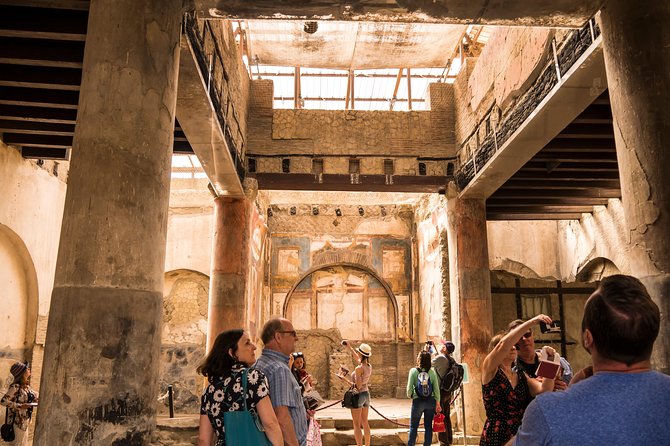
- Casa dei Cervi (House of the Stags)
- La Terrazza di M. Nonio Balbo (the benefactor’s story)
- College of the Augustales
- Casa del Rilievo di Telefo
- Partem Domus lignea (the house with the surviving wooden partition)
- House of the Skeleton
- Central Thermae (men’s and women’s baths)
- Casa del Salone Nero (the Black Hall)
- Casa Sannitica
- Casa del Bel Cortile
- House of the Grand Portal
- Why this Herculaneum tour feels like better value than a random add-on
- The practical bits: what you should plan for
- Who should book this, and who might prefer something else
- Should you book this Naples-to-Positano transfer with Herculaneum?
- FAQ
- How long is the Naples to Positano transfer with the Herculaneum stop?
- Where do we meet the guide for the Herculaneum visit?
- Is Herculaneum admission included in the price?
- Is this tour private or shared with other groups?
- Are meals included?
- Can I get a full refund if my plans change?
Key things that make this tour work well
- Door-to-door pickup in Naples and hotel drop-off in Positano means less hassle and less wasted time
- Two-hour guided Herculaneum stop turns a transfer day into a meaningful site visit
- Air-conditioned private minivan with a professional driver keeps the journey comfortable
- Luggage stays handled because your driver remains with the vehicle
- A named guide like Laura is called out for strong Roman-history storytelling
- Tickets are built in (Herculaneum entry tickets included), so you’re not scrambling on arrival
More runs down to Pompeii and the crater
Naples to Positano, but with the stress removed
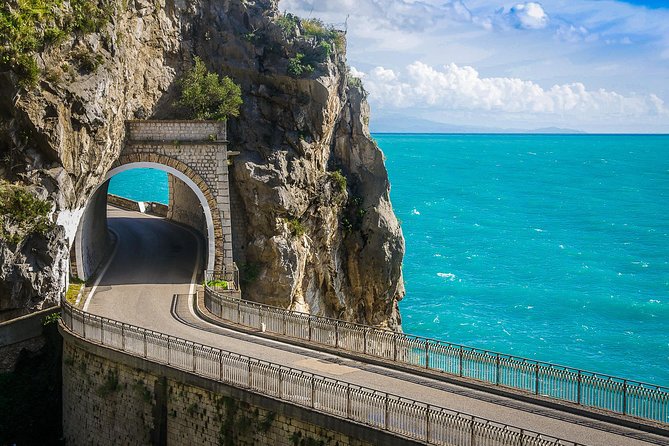
If you’ve done the Amalfi Coast route the usual way, you already know the pain: schedules, connections, and crowds can eat your day. This experience starts with you choosing your pickup time and location in Naples, then it moves you to Positano in a private, air-conditioned minivan. The driver is professional, and the whole point is simple: you avoid the transfer chaos and keep your day under control.
I like that it’s genuinely practical. Your bags ride with the vehicle, and while you’re inside Herculaneum with the guide, the driver stays with the car. That means you’re not constantly herding luggage around tight meeting points, and you’re not splitting your attention between transit problems and ruins.
In Positano, you get dropped off at the end by hotel drop-off. That last mile matters more than people think, especially if you’re landing with heat, stairs, and limited patience.
How the Herculaneum visit fits inside a 4-hour plan
The total experience runs about 4 hours. Within that window, the Herculaneum portion is designed as a focused visit—short enough to keep the transfer on track, but structured so you don’t just wander. You meet the guide at the ticket office of the Parco Acheologico di Ercolano, and you’ll have entry handled for Herculaneum.
This is also where you’ll feel the value most. Pompeii is the famous name; Herculaneum is the buried one that often gets overlooked. The tour keeps you moving through key houses and public spaces, giving you quick context for what you’re seeing—like why a house has a particular name, or what a bath complex tells you about daily Roman life.
You’ll see a lot of site highlights, but in 15-minute chunks. That pacing is great for getting oriented. It’s less great if you want to spend long, quiet stretches studying frescoes panel by panel. Think of it as a best-of introduction.
Stop-by-stop: what you’ll see at Herculaneum

Below is the shape of the guided walk. Each segment is short, but the guide’s job is to connect the dots so the ruins don’t feel like disconnected walls.
Parco Acheologico di Ercolano (entry + orientation)
You begin at the ticket office at Herculaneum ruins. Admission is included, and there’s a brief starting moment with the guide. This matters because once you’re inside, the site is spread out—orientation helps you understand what area you’re in and what to look for next.
Sorting the getting-around? More transfers here


Casa dei Cervi (House of the Stags)
One of the first houses on your path is called Casa dei Cervi, named for marble statues of stags or deer found in the peristyle. This is the kind of detail I like in a guided ruins visit: a place name that actually tells you what survives and what mattered to the owner. Even in a short stop, you’ll get the why behind the label.
La Terrazza di M. Nonio Balbo (the benefactor’s story)
Next is the terrace connected to M. Nonius Balbus, the city’s major benefactor. The long inscription tied to his funeral altar is the star here—this is where Roman public life shows up in stone, not just architecture. If you like the political side of Roman history—who paid for what and how they were honored—this stop gives you that angle fast.
College of the Augustales
You’ll also see the College of the Augustales, a building thought to relate to the cult of Emperor Augustus and the headquarters of the Collegium Augustalium. It may even connect to the local curia. This stop is useful because it expands Herculaneum beyond “rich houses.” It reminds you this was also a town with institutions and ceremony.
Casa del Rilievo di Telefo
This house is linked to a relief and is notable because it possibly belonged to a leading benefactor, with a special feature: it has its own private access to the adjoining Suburban Thermae to the south. Translation for your brain: you’re not just seeing a home—you’re seeing how elite households worked around access to baths and amenities.
Partem Domus lignea (the house with the surviving wooden partition)
One stop focuses on Partem Domus lignea, tied to an elegant wooden partition that remained. Wooden elements don’t usually survive well in archaeology, so when something like this is visible, it helps you picture daily interiors in a more complete way.
House of the Skeleton
Then you get the House of the Skeleton. The name comes from human remains found in a second-floor room back in 1831. It’s a heavy stop, but guided context is important here. You’ll get more meaning than just the spooky name.
Central Thermae (men’s and women’s baths)
The Central Thermae were built around the beginning of the 1st century AD, and they’re described as divided—men’s and women’s baths with separate entrances. This is a strong “wow, the everyday was organized” moment. You’re looking at a system, not just a room.
Casa del Salone Nero (the Black Hall)
Casa del Salone Nero is one of Herculaneum’s more luxurious mansions. The monumental entrance still retains carbonised remains of doorposts and lintel, which is both eerie and impressive. If you’ve ever wondered how people moved through doorways and thresholds, this stop gives you a visible trace of that reality.
Casa Sannitica
Casa Sannitica highlights an arrangement typical of the Samnites. You’ll see an atrium with a gallery lined by Ionic columns, plus rooms decorated with frescoes. This stop helps you compare Herculaneum houses with broader Italic building traditions, not just one local style.
Casa del Bel Cortile
This is one of the most original houses in the site, known for its courtyard with a stairway and a stone balcony instead of the usual atrium. If you’re the type who likes how spaces are designed—where movement happens and how people used open areas—this stop feels especially “human,” even with the time period so far away.
House of the Grand Portal
You finish with the House of the Grand Portal, in the centre of the archaeological area. The focus is on several environments, colonnati, and frescoes, plus charred remains of wooden parts. It’s a fitting close, because it mixes grandeur with the visible aftermath of disaster—architecture and loss in the same frame.
Why this Herculaneum tour feels like better value than a random add-on
The big win here isn’t just that Herculaneum is included. It’s that the whole package is built around efficiency and context.
First, you save hours. Instead of cobbling together public transport from Naples to Positano, dealing with uncertain departure times, and then figuring out Herculaneum logistics on your own, you get a private transfer that already has the timing worked out.
Second, the guided time is structured around interpretation. In the feedback I’m using to shape this review, the tour guide at Herculaneum is repeatedly praised—specifically for knowing Roman history and bringing it to life. Even with short stops, that kind of storytelling changes what you see from random ruins to connected places.
Third, Herculaneum is a smart choice if you want variety. One comment hits the idea directly: the visit is shorter than Pompeii but still really interesting by comparison. If you’re spending time on the Amalfi side, this is a great way to add a Roman-city layer without needing an entire extra day.
The practical bits: what you should plan for
You’re paying $456.70 per person for the private experience. For some people, that price feels steep. But check what’s bundled in: private air-conditioned minivan, professional driver, one-way transport from Naples to Positano, Herculaneum entry tickets (listed as €16 each), a professional guide at Herculaneum, taxes, and hotel drop-off. You’re also getting a logistics win: the driver stays with the vehicle while you tour, so you’re not paying in energy and time.
Also, it’s booked about 37 days in advance on average, which hints it’s a popular way to combine Amalfi Coast travel with a major historical stop. If you’re traveling in peak season or on a tight schedule, booking ahead is a smart move.
Car seats are available on request, and service animals are allowed. If you like having options, that’s useful. And because it’s described as private, your group is the only one participating—no mingling with strangers mid-ride.
What’s not included is meals. Since the plan centers on the transfer and the Herculaneum visit, you’ll want to plan a snack or plan to eat after you reach Positano.
Who should book this, and who might prefer something else
This is best for you if:
- you want to travel from Naples to Positano with minimal fuss
- you like archaeology and want a guided overview without committing a full day
- you’d rather pay for time-saving convenience than spend hours figuring it out
It may not be best if:
- you want to linger long in one house or room for photography or slow study (the Herculaneum portion is paced in short segments)
- you’re on a strict budget and prefer DIY transit
One small reality check: the timing is efficient. That’s the magic trick. But it also means you won’t have unlimited freedom to stop for extra views inside the site. If you’re the type who wants to wander independently after a tour, consider whether you’ll want extra hours in Herculaneum before or after.
Should you book this Naples-to-Positano transfer with Herculaneum?
Yes, you should consider booking it if you want your transfer day to feel like a real experience, not just transportation. The combination is strong: private air-conditioned comfort from Naples, plus a guided walk through Herculaneum’s standout houses, baths, and institutions.
If you value time, dislike public-transport friction, and like your history guided rather than self-decoded from signs, this one makes sense. You’re paying for the convenience, the included entry, and the guide who can connect the scenes.
And if your main goal is simply getting to Positano with the lowest possible cost, you might decide to do it independently. But for many people heading along the Amalfi Coast, the saved hours and the high-impact Herculaneum stop are exactly what turns a transfer into a highlight.
FAQ
How long is the Naples to Positano transfer with the Herculaneum stop?
The experience runs about 4 hours total, including a guided stop at Herculaneum that’s described as roughly two hours.
Where do we meet the guide for the Herculaneum visit?
You meet the guide at the ticket office of the Parco Acheologico di Ercolano.
Is Herculaneum admission included in the price?
Yes. Herculaneum entry tickets are included (listed as €16.00 each).
Is this tour private or shared with other groups?
It’s a private tour/activity, meaning only your group participates.
Are meals included?
No, meals are not included.
Can I get a full refund if my plans change?
Yes. Free cancellation is available up to 24 hours in advance of the experience start time for a full refund.
If you tell me your travel month and whether you’re starting from a hotel or a cruise port in Naples, I can suggest the smartest pickup timing style for minimizing rush and maximizing your time in Positano.
More Tour Reviews in Positano


More Transfers and Drivers

Pompeii and Vesuvius, More Trips


Fresh on the site: more Positano tours and day trips we have just reviewed






Pompeii & Vesuvius Day Trips, compared.
 ★ 4.7From Rome: Pompeii, Positano and Amalfi Full-Day TourFrom $292430 reviews
 ★ 4.8From Rome: Day Trip to Pompeii and Sorrento with LunchFrom $131269 reviews
 ★ 5.0Small Group Guided Pompeii Tour from PositanoFrom $180144 reviews
 ★ 4.4From Pompeii/Vico Equense: Amalfi, Positano, & Ravello TourFrom $105133 reviews
Pompeii, Vesuvius, & Wine Tasting with LunchFrom $287114 reviews
 ★ 5.0Pompeii Guided Tour from Amalfi CoastFrom $16772 reviews
 ★ 4.5Pompei & Vesuvius small group with Skip the line ticketsFrom $16271 reviews
 ★ 5.0Enjoy Pompeii & Mt. Vesuvius: Semi-Private Tour from PositanoFrom $25265 reviews
Browse the lists this tour appears in